Why Spending US Dollars in Costa Rica Can Be Surprisingly Difficult
When money is the subject, I am as old school as anybody. Cash is king in my world. The thrill, the feel of a stack of banknotes will always beat looking at a set of digits on my phone screen. Like precious metals, classic cars and gemstones, paper currency is tangible; You can touch it, hold it, photograph it fanned out in your hand like some young dude on his way to the pawn shop to get his gold chain out of hock.
When it comes to greenbacks– US dollars– I am clearly part of a vanishing breed. Only about ten percent of the US dollar supply is represented in cash and coins. The rest is numbers on a screen, digital transactions accessed in a few seconds, no counting of change needed. Our dominant method of payment is as common worldwide as locally.
India, Brazil and China – three of the major BRICS countries– are also the top three in percent of digital transactions. As for Costa Rica, the number is around thirty percent of transactions still done with cash, which is the sector I prefer to deal with. Which brings me to an occasional issue I have here when exchanging dollars for colons.
As if the plunging dollar versus colon rate isn’t enough of a problem, every bank teller, every super market cashier, every dive bar cantinero is an expert in US dollar analysis. Every twenty dollar bill is meticulously examined and the slightest imperfection can mean rejection. Take for instance, this twenty dollar bill that I have tried to use for payment at least a dozen times.
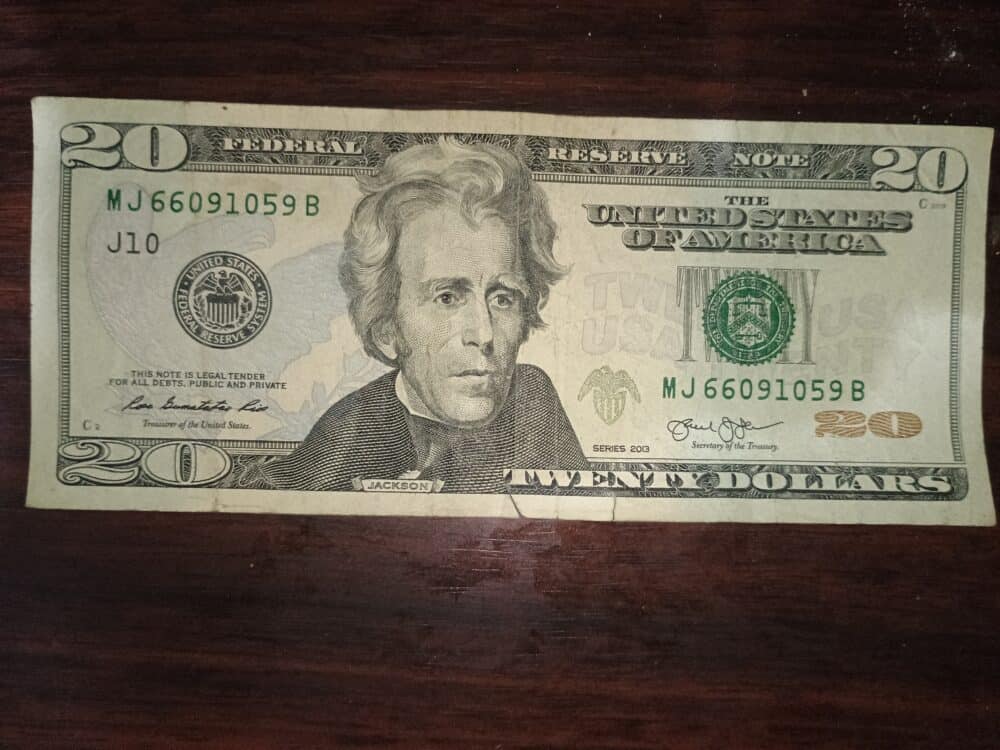
It is always refused due to a miniscule tear of maybe ¼ of an inch along the bottom center of the bill. Ironically, this bill was dispensed to me through a BAC San Jose ATM. Needless to say, I couldn’t exchange it with BAC San Jose either. So my slightly defective 20-spot stays in my wallet, only usable in the US, or maybe in a game of Liar’s Poker.
Costa Rica’s modern banknotes are made of a polymer substrate. This durable plastic film replaced the cotton-paper mixture of the old currency. The new bills are harder to counterfeit and last longer in the tropical heat and humidity. They are also more difficult to deface.
The old paper currency used to double as a sketchpad for many. My wallet would hold many colon notes with the faces of the historical Ticos depicted on the bills altered with fake beards, Hitler moustaches, dark glasses, etc. And of course, these bills were always accepted as it is the local currency.
Are they still accepting defaced colons? Here is a 1000 colon note somebody recently passed me:
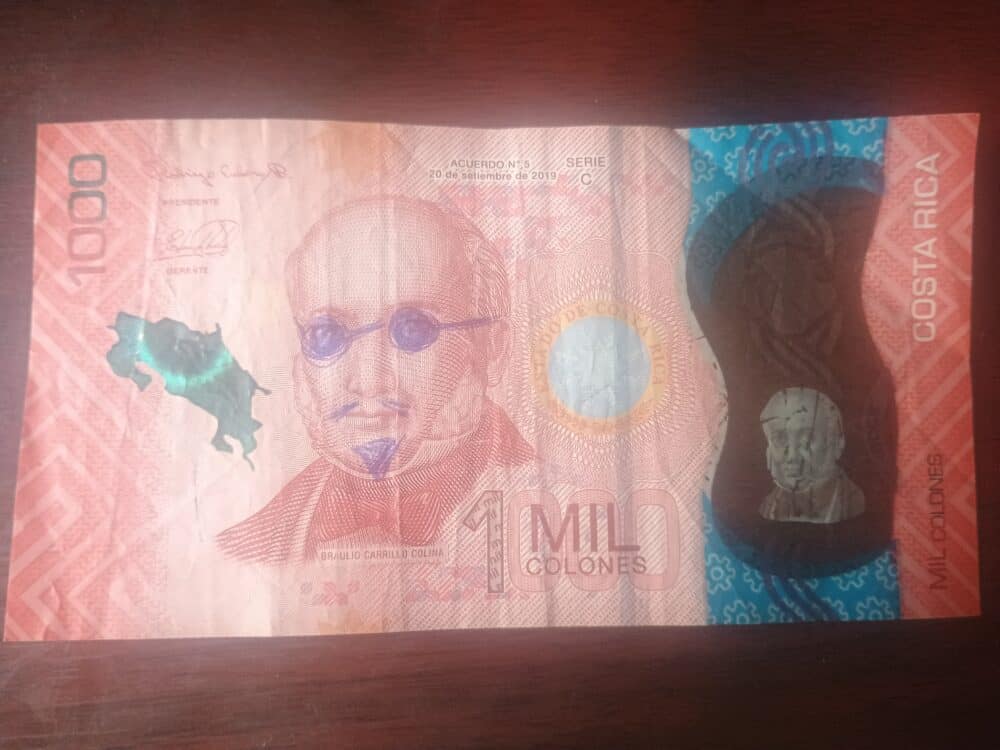
It looks like Vladimir Lenin wearing psychedelic shades. Will it be accepted as legitimate currency? I am guessing it will. If not, it can join the 20 dollar bill in the inside pocket of my wallet.
The post Why Spending US Dollars in Costa Rica Can Be Surprisingly Difficult appeared first on The Tico Times | Costa Rica News | Travel | Real Estate.

Comments
Post a Comment